

When you are expecting a baby, you rely on prenatal visits, testing, and your medical team to watch for signs that your pregnancy may require closer attention. If your baby is born prematurely, has a low birth weight, or experiences complications during labor or delivery, you may later find yourself wondering whether there were warning signs and whether anything could have been done differently.
Those questions cannot be answered by statistics alone. But new research from Fronzuto Law Group provides a closer look at how several important birth-related health measures vary across the country and within New Jersey.
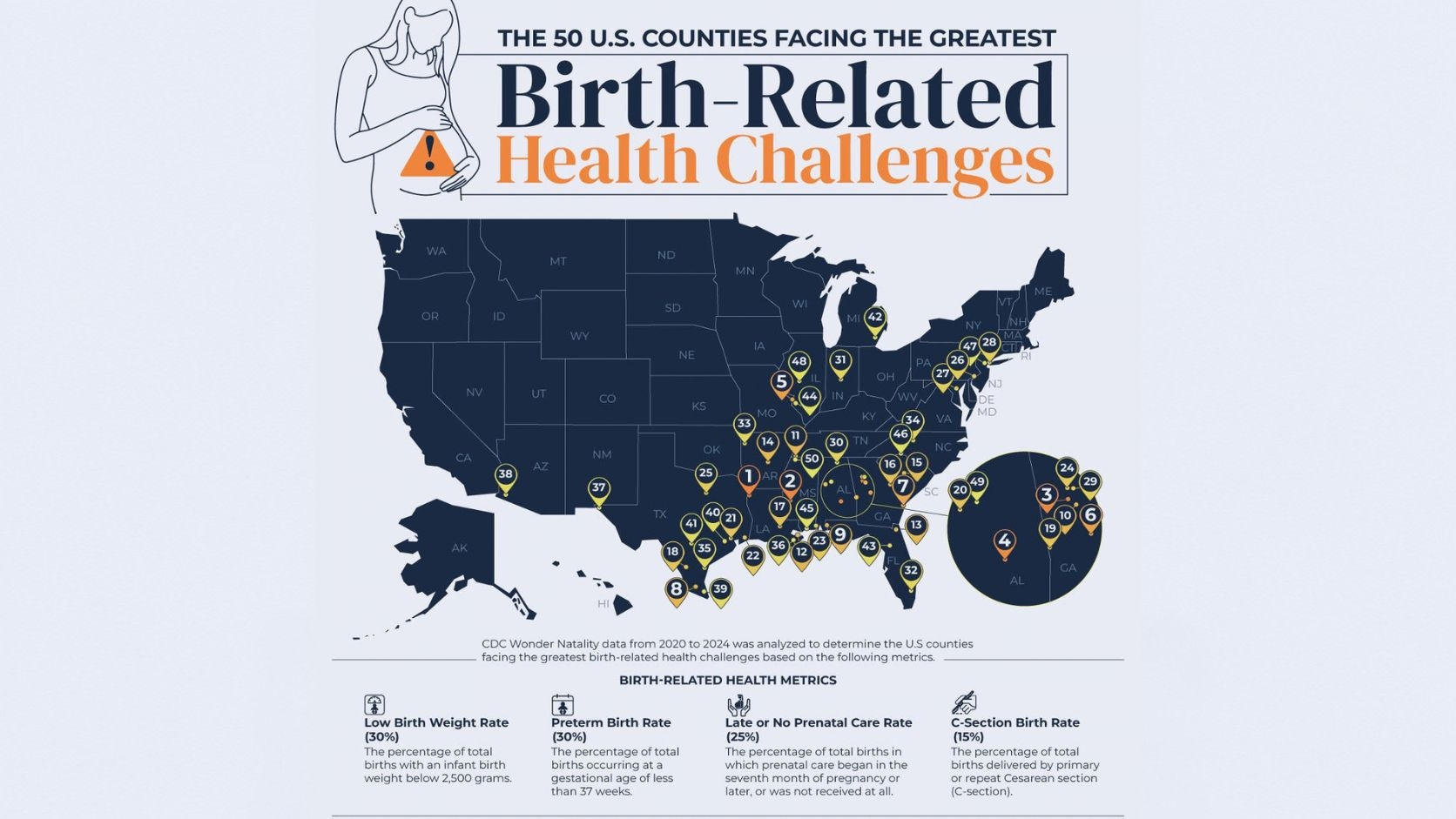
A new Fronzuto Law Group research study analyzed federal birth data using four measures: low birth weight, preterm birth, late or no prenatal care, and C-section deliveries.
The findings show significant differences from one community to another. For New Jersey families, they also reinforce why prenatal monitoring and an appropriate response to complications can matter when a pregnancy or delivery becomes higher risk.
The statistics do not show that a particular poor outcome was caused by medical negligence. What they can show is where certain pregnancy and birth-related health challenges occur more frequently and why the circumstances surrounding an individual pregnancy or delivery sometimes deserve a closer look.
What Did the Birth-Related Health Study Measure?
Fronzuto Law Group analyzed CDC WONDER natality data covering births from 2020 through 2024.
The study created a composite index using four indicators associated with pregnancy and infant health:
- Low birth weight, meaning a baby was born weighing less than 2,500 grams
- Preterm birth, meaning delivery occurred before 37 weeks of pregnancy
- Late or no prenatal care, meaning prenatal care began during the seventh month or later or was not received
- C-section delivery rates
Preterm births and low birth weight received the greatest weight in the index because the study treated them as measures that directly reflect infant health risk. Late or absent prenatal care was also weighted heavily, reflecting the role prenatal visits can play in monitoring a pregnancy and identifying complications that may require additional attention.
C-section rates were weighted less heavily. A C-section is not, by itself, evidence that something went wrong. Cesarean delivery can be medically appropriate and, in some circumstances, an important intervention for protecting the mother or baby.
The national analysis included 362 counties that recorded at least 10,000 births during the five-year study period.
Where Were Birth-Related Health Challenges Most Pronounced?
The study found a striking geographic pattern.
Nineteen of the 20 highest-ranked counties were in Southern states. Caddo Parish, Louisiana, ranked first nationally, followed by Hinds County, Mississippi. Clayton County, Georgia; Montgomery County, Alabama; and St. Louis city completed the top five.
The individual statistics show why looking beyond a single measure matters.
For example, Caddo Parish recorded a 17.8% preterm birth rate, while Hinds County's rate reached 18%. Yuma County, Arizona, had a 17.6% rate of late or no prenatal care.
Nationally in 2024, the study reported an average low-birth-weight rate of 8.52%, a preterm birth rate of 10.4%, a late-or-no-prenatal-care rate of approximately 7.3%, and a C-section rate of 32.4%.
The counties ranking highest generally experienced challenges across several measures rather than standing out for only one.
What Did the Study Find About New Jersey?
The New Jersey results also showed differences from county to county.
Essex County ranked highest in New Jersey and 47th nationally. Among births included in the study, Essex County recorded a 9.1% low-birth-weight rate, a 10.3% preterm birth rate, an 11.5% rate of late or no prenatal care, and a 35% C-section rate.
Passaic County ranked second in the New Jersey index, with a 9.2% low-birth-weight rate, an 11.7% preterm birth rate, a 6.8% rate of late or no prenatal care, and a 39.7% C-section rate. Cumberland, Camden, and Mercer counties completed the state's five highest-ranked counties.
Ocean County had the lowest composite score among the New Jersey counties with available data.
These rankings do not mean that giving birth in one New Jersey county is necessarily safer or more dangerous than giving birth in another. They also should not be treated as grades for particular hospitals, doctors, or other medical providers. County-level statistics cannot tell us why an individual child was injured or whether a provider met the applicable standard of care.
They can, however, show broader differences in the birth-related health measures examined in the study and help put New Jersey's results into context.
Why Prenatal Monitoring Can Matter When Risks Develop
One of the study's four measures was late or absent prenatal care.
Prenatal visits give medical providers opportunities to evaluate the health of the mother and developing baby, track changes during pregnancy, and respond when warning signs appear.
Some pregnancies require more than routine observation. A rising blood pressure reading, concerns about whether the baby is growing as expected, reduced fetal movement, signs of infection, or a suspected placental problem can change what monitoring, testing, or follow-up is appropriate.
If a child later experiences complications or an injury, those details can take on greater importance. You may look back and remember repeatedly reporting symptoms, being told to return for additional testing, learning that an ultrasound showed a problem, or being admitted to the hospital because your doctor was concerned about you or your baby.
The situation can also change during labor.
Fetal heart-rate patterns, the mother's condition, how labor is progressing, and other clinical findings can affect what the delivery team does next. Depending on what those findings show, providers may need to continue monitoring, take steps to address a developing problem, or decide whether delivery should occur sooner.
Not every complication can be prevented, and a difficult delivery does not mean that someone was negligent. Serious injuries can occur even when doctors and nurses provide appropriate care.
But if warning signs were present and a provider failed to recognize them, failed to investigate them, or did not respond appropriately as the circumstances changed, it can be important to determine whether that delay or omission contributed to the resulting harm.
A High C-Section Rate Does Not Mean C-Sections Are the Problem
The C-section data require particular care when interpreting the study.
A higher county C-section rate does not show that physicians in that county are providing negligent care. There are many medical reasons a C-section may be recommended, and in some pregnancies, performing one promptly can protect the mother, baby, or both.
In a birth injury case, the relevant issue may actually be the opposite: whether a C-section should have been performed sooner.
For example, if fetal heart-rate monitoring shows concerning changes during labor, those findings can become important to decisions about how the medical team responds and whether delivery should occur sooner. Whether a delay was unreasonable depends on the clinical circumstances, the applicable standard of care, and whether the delay actually contributed to the child's injury.
That is a very different question from simply asking whether a C-section occurred.
Birth Statistics Cannot Determine Whether Medical Malpractice Occurred
Perhaps the most important distinction in interpreting this research is the difference between risk and negligence.
A child being born prematurely does not prove malpractice. Neither does low birth weight, a C-section, or a difficult pregnancy.
Medical malpractice requires a fact-specific review of what happened to a particular patient.
When a baby experiences a serious birth injury, that review can involve prenatal records, fetal monitoring strips, laboratory testing, imaging, medication records, labor and delivery notes, operative reports, newborn records, and the timing of decisions made by the medical team.
The question is not simply whether something went wrong. It is whether the care provided fell below the applicable standard of care and whether that failure caused the resulting harm.
What These Findings Mean for New Jersey Families
Fronzuto Law Group's research shows how much the birth-related health measures examined in the study can vary from county to county, including within New Jersey.
If you are currently pregnant, the findings are not a prediction of what will happen in your pregnancy. They do reinforce the importance of attending prenatal appointments, understanding any risk factors your medical team identifies, and asking questions if additional testing, monitoring, induction, C-section delivery, or another intervention is recommended.
If your child has already suffered a serious birth injury, however, statistics cannot tell you why it happened.
You may instead be trying to understand why your baby needed emergency treatment after delivery, why a C-section was not performed sooner, whether concerning test or monitoring results were recognized, or why your child now requires ongoing medical care, therapy, or other support.
Understanding what happened requires looking at the circumstances of your pregnancy and delivery rather than relying on county-level statistics. The timeline of your care, the warning signs that were present, and how the medical team responded can help determine whether the injury involved an unavoidable complication or whether the care warrants closer examination.
Fronzuto Law Group represents New Jersey families in complex birth injury and medical malpractice cases. If your child suffered a serious injury and you are trying to understand whether medical care before or during delivery contributed to what happened, use our contact form to schedule a free consultation with our New Jersey birth injury lawyers and learn more about your legal options.
Disclaimer: The articles on this blog are for informational purposes only and are no substitute for legal advice or an attorney-client relationship. If you are seeking legal advice, please contact our law firm directly.